domingo, 31 de agosto de 2008

CRUISE SHIP (I)

VOCABULARY about SHIPS

You need vocaburary in your " Cruise Ship) !!!
The upper berth = la litera de Arriba . / The lower berth = la litera de Abajo .
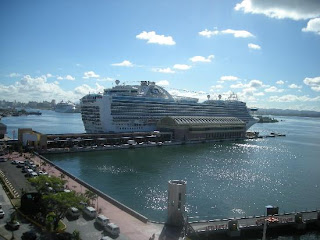
/ Traveller = viajero. / My favourite ships = mis barcos favorites. /The habit = la constumbre . / (to) wait = esperar. / (to) board = subir a bordo. /Voyage = viaje. / I got on board = yo subí a bodo / and I hailed a steward = yo saludé al camarero. / I recognized = yo conocía. / I ask = yo pido, pregunto. I asked him = yo le pedí. / (to) accompany = acompañar . / cabin = camarote. / Another bottle of dry champagne = otra botella de champán. /He took my luggage = el cogió mi equipaje. / And led the way = y me indicó el camino . / I followed him = yo lo seguí. / Cabin was on the lower deck = el camarote estaba en la cubierta inferior. / On the port side and near the stern = del lado de babor y cerca de la popa.
There was a washstand = había un lavabo. / More passengers and tips = más pasajeros y propinas. / It is always a good things to be on the good side of the stewards = Siempre es bueno estar a bien con los camareros. / Possibly his fees had gone up = probablemente sus tarifas habián subido. An he was not satisfied = y no estaba satisfecho. /However, I was wrong. Sin embargo, estaba equivocado. / The first day at sea = El primer día en el mar. /People pace the decks = las personas caminan por las cubiertas. / They speculate about the food and the weather = Hablan sobre la comida y el tiempo. / The passengers seasick = los pasajeros se marean. / One trip across the Atlantic = Un viaje a través del Atlántico. I had a companion = yo tenía un compañero. / I was asleep when = Yo estaba dormido cuando. / My roommate = mi compañero de habitación. / To open the bolt of the door = abrir el pestillo de la puerta. /I heard his footsteps = y oí sus pasos. / Living the door open behind him = dejando la puerta abierta detrás de él . I gota up and shut it and returned to my berth = Me levanté y la cerré, y regresé a mi litera.
/ I went to sleep again = Volví a dormirme.
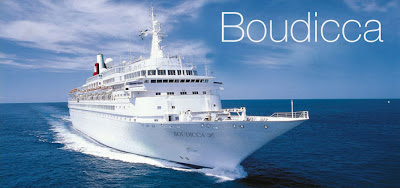
But I have no idea how long I slept = pero no tengo si idea de cuánto tiempo dormí. When I woke up it was still quite dark = Cuando me desperate aún estaba bastante oscuro. I felt cold and the air was damp = sentía frío y el aire era húmedo. I know the peculiar smell of a cabin = Yo sé (conozco) el olor peculiar de un camarote. To make a complaint = Presentar un queja. The ship was rolling heavely = el barco se balanceaba pesadamente. I decided that I had slept enough = decidí que ya había dormido suficiente. As I said before = como he dicho antes. The cabin was uncomfortable = el camarote era incómodo. So I dressed quickly and went up on deck = de manera que me vestí rápidamente y subí a cubierta. The ship´s doctor = el médico del barco. A fine morning = una mañana estupenda. By way of an introduction = a modo de presentación. “I was very cold last night “I said: anoche pasé mucho frío- dije- . The cabin was damp = el camarote estaba húmedo. What´s the matter? I asked ¿Qué pasa? Pregunté. Oh – nothing, he answered = Oh …nada – respondió -. I like this ship = me gusta este barco. What are you saying? ¿ Qué está diciendo?. Before we reached our destination = antes de llegar a nuesto destino.

martes, 8 de julio de 2008

SPORT FLIGHT


SPORT FLIGHT
1.- Hot–air ballooning
This was the earliest historically document form of human flight, dating from 1783. As the name suggests, elevation is achieved by the heating of air in a balloon. The pilot then has to find winds at different altitudes that will allow him or her to go in the desired direction.
2.- Hang-gliders
The idea of flying without the propulsion of a motor is maintained in the term “ hang-gliding”. A hang-gliding is a triangular-shaped sail, whose design is based on a kite, under which a person is suspended.
3.-Sports Parachuting
This sport involves jumping out of a plane and then using a parachute to slow your descent when you approach the ground.
4.-Skydiving
This is a type of parachuting in which the objective is to spend as much time as possible falling and doing acrobatics before using the parachute. This part of the jump is known as “ free fall”. After approximately 12 seconds skydivers reach terminal velocity, about 190 km/hour.
5.-Paragliding
This term is a portmanteau: the contraction of “parachute gliding”. In this case the sportsperson is suspended below a modified parachute. This is rectangular and therefore can be manoeuvred so that she/he can change direction. As with hand-gliding and gliding, the paraglider tries to use thermal currents to stay in the air as long as possible. Experienced paragliders can stay airborne for hours.
Other: Gliders, Micro-lights, Parasailing…

lunes, 26 de mayo de 2008

JK ROWLING

JK ROWLING
She is author of the Harry Potter fantasy series. She´s internationally famous. And her books have sold over 377 million copies worldwide. Jk Rowling is one of the world´s most successful writers.
SUCCESS
In February 2004, Forbes magazine estimated Rowling´s fortune to be 576 million pounds; and in 2006, Forbes named her the second richest female entertainer in the world, after talk show host Oprah Winfrey. So, how did she get there?
Rowling was born near Bristol, England. As a child, she enjoyed writing stories, which she often read to her sister. At school, Rowling was good at languages, but didn´t like sports or maths.
After studying French and Classics at the University of Exeter ( with a year of study in Paris), she moved to London to work as a researcher and bilingual secretary for Amnesty international. One day, while she was on a four-hour delayed-train trip between Mancherter and London, she developed the idea for a story of a young boy who goes to a school of wizardy. As soon as she got home, she began writing.
The Books
Harry Potter and the Philosopher's Stone was published by Bloomsbury Children's Books in June 1997 and was published as Harry Potter and the Sorcerer’s Stone in America by Arthur A. Levine Books/Scholastic in September 1998.
The second title in the series, Harry Potter and the Chamber of Secrets, was published in July 1998 (June 2, 1999 in America) and was No. 1 in the adult hardback bestseller charts for a month after publication.
Harry Potter and the Prisoner of Azkaban was published on 8th July 1999 (September 8, 1999 in America) to worldwide acclaim and massive press attention. The book spent four weeks at No.1 in the adult hardback bestseller charts, while Harry Potter and the Philosopher's Stone simultaneously topped the paperback charts. In the US the first three Harry Potter books occupied the top three spots on numerous adult bestseller lists.
The fourth book in the series, Harry Potter and the Goblet of Fire was published in Britain, the USA, Canada and Australia 8th July 2000 with a record first print run of 1 million copies for the UK and 3.8 million for the US. It quickly broke all records for the greatest number of books sold on the first weekend of publication.
The fifth book in the series, Harry Potter and the Order of the Phoenix, was published in Britain, the USA, Canada and Australia on 21st June 2003. Published in paperback on 10th July 2004, it is the longest in the series – 766 pages - and broke the records set by Harry Potter & the Goblet of Fire as the fastest selling book in history. The sixth book in the series, Harry Potter and the Half-Blood Prince, was published in the UK, US and other English-speaking countries on 16th July 2005 and also achieved record sales.
The seventh and final book in the series, Harry Potter and the Deathly Hallows, was published in the UK, US and other English speaking countries on 21st July 2007. The book is the fastest selling book in the UK and USA and sales have contributed to breaking the 375 million copies mark worldwide.
J K Rowling has also written two small volumes, which appear as the titles of Harry’s school books within the novels. Fantastic Beasts and Where to Find Themand Quidditch Through The Ages were published by Bloomsbury Children’s Books and Scholastic in March 2001 in aid of Comic Relief.
The Harry Potter books are distributed in over 200 territories and are translated into 65 languages.
http://www.scholastic.com/harrypotter/books/author/index.htm

jueves, 1 de mayo de 2008


THE VEGETABLES:
Carrot(zanahoria). Potato .Tomato .Spinach.Lettuce(lechuga). Chard (Acelga). Red chard. Broccoli. Kale (col) Cabbage (col) Pepper(pimiento).Pea(guisante).Bean(alubias). Green Bean. Asparagus.Beet(remolacha). Beetroot.Sugar beet. Celery (acelga). Onion(cebolla). Garlic(ajo). Cucumber (pepino). Gherkin (pepinillo) Artichoke(alcachofa) Aubergine (berenjena). Cauliflower. Parsley (peregil). Pumpkin (calabaza) – Juice and Squash(zumo).
Reading about vegetables:
I love eating vegetables. Do you? Why do people eat vegetables?
They taste good. They´re good for you. And they´re fun, too!
There are lots of different vegetables. And there are lots of different ways to eat them. It´s good to eat fruit or vegetables five times a day.
Vegetables are good for your body and some part of the body for example: eyes, hair and skin. They help your blood and your muscles.
Vegetables are: res, green, black, white, purple, yellow. Orange, brown and pink.
Some vegetables are hard other soft.
Different vegetables grow in different places around the world: In Mexico people eat cactus leaves. In Japan people eat seaweed in sushi. In Brazil people eat cassavas.
¿What´s your favourite vegetables?... Some vegetables are noisy. Mala is eating celery Listen!
Find new ways to eat your favourite vegetables! Salads, soups, stir-fry, salsa.
Eat your favourite vegetables every day! And try a new vegetable today, too!

jueves, 28 de febrero de 2008

JENNIFER PAIGE - STRANDED LYRICS


You know it only breaks my heart
To see you standing in the dark
Alone waiting there for me to come back
I'm too afraid to show
If it's coming over you
Like it's coming over me
I'm crashing like a tidal wave
That drags me out to sea
I wanna be with you
If you wanna be with me
Crashing like a tidal wave
I don't want to be
Stranded(5)
So baby come back to me [Stranded] (Bis)
I can only take so much
These tears are turning me to rust
I know you're waiting there for me to come back
I'm too afraid to show
If it's coming over you
Like it's coming over me
I'm crashing like a tidal wave
That drags me out to sea
I wanna be with you
If you wanna be with me
Crashing like a tidal wave
I don't wanna be
(Stranded)It's coming over you
(Stranded)It's coming over me
(Stranded)It's coming over you
(Stranded)Yeah yeah yeah
I miss you
I need you
Without you
I'm stranded
I love you
So come back
I'm not afraid to show
Crashing like a tidal wave
Drags me out to sea
I wanna be with you
You wanna be with me
Crashing like a tidal wave
I don't wanna
Stranded
It's coming over you [Stranded]
It's coming over me [Stranded]
It's coming over you [Stranded]
Stranded(3)
So baby come back to me [Stranded](Bis)
(Stranded)Coming over you
(Stranded)Coming over me
(StrandedComing over you
(Stranded Stranded)So baby come back to me(Bis)
Stranded(4)


jueves, 21 de febrero de 2008

POLAND


POLAND
Poland covers 312.685km(2), making it the world´s 63rd largest country and Europe´s 9th largest. Territorial waters extend over 8700km(2), while the Vistula and Szczecin Lagoons cover 1200 km(2). The country´s nearly 39 million inhabitants are 96% Polish, 4% ethnic minorities – mainly Germans, Byelorussians and Ukrainians. The official language is Polish, the currency the zloty ( of which 1 is made up of 100 groszy). The country is a pluralistic democracy with a parliament elected by universal suffrage every four years. 460 senators in its Senat.The President of the Republic is in turn elected every 5 years. The legal foundations of the Third Republic of Poland are as set out in the Constitution of April 2nd 1997.
The emblem of Poland is a vhite eagle in a golden crown facing right, with a golden beak and claws, set against a red rectangular field. The Polish colours are red and white and these are arranged horizontally on the country´s flag, with white above and red below.
An Act entering into force on January 1st 1999 ushered in a new territorial division of the state, into 16 voivodships ( province-regions ), 315 poviants ( “counties” ) pus 65 towns with poviat rights and 2489 urban, urban-rural, and rural. The nation´s capital is Warsaw. The Polish calendar includes 11 public holidays, which are either national commemorations (labour Day- May 1st, Constitution Day- May 3rd and Independence Day- November 11th) or days of religious significance (two days at Easter, Corpus Christi, August 15th- the holiday of the Assumption of the Virgin Mary, November 1st- All Saints Day, December 25th and 26th- Christmas Day and Boxing Bay), plus January 1st- New Year´s Day.

viernes, 15 de febrero de 2008

CASTLE


5.- THE OLD CASTLE
Dracula´s castle was very old.
The large, dark rooms were very

cold.
The castle door was strong and wide.
But something scary was there inside.
Dracula´s picture was on the wall.
At the end of the long dark hall.
His eyes were red. His face was white.
His teeth were long and ready to bite.

This hall was long and full of spiders
And the bathrooms were full of lizards.
The cellar was dark and full of bats,
The bedrooms were full of toads and rats.

I was scared of the ghosts and rats,
The toads and bats, the spiders and cats.
And I was all alone that night,
In Dracula´s castle in the pale moonlight.